
Education
Why Do Headlights Become Foggy?
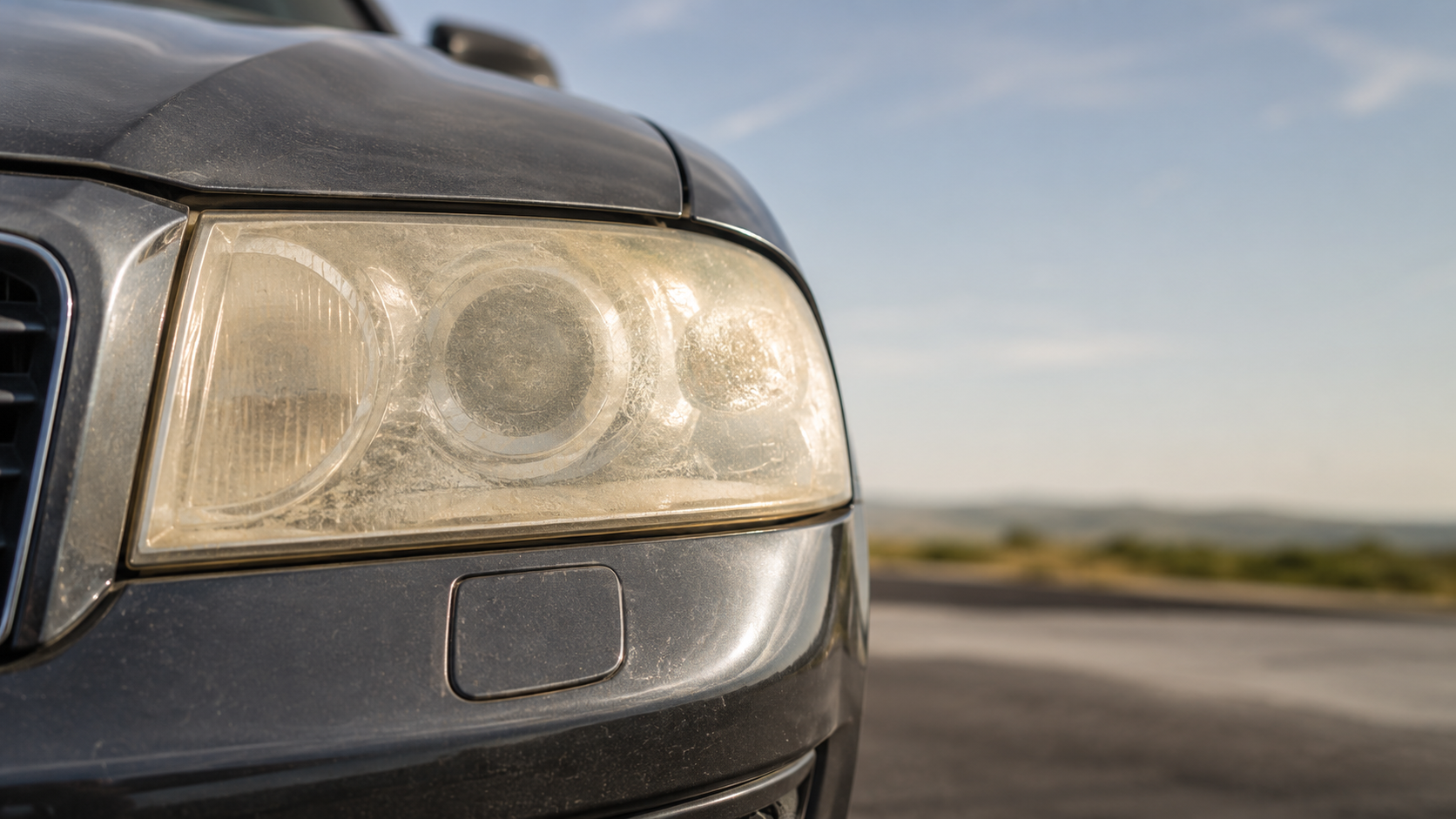
Foggy, yellow, or cloudy headlights are more than just a cosmetic problem. They can make your vehicle look older, reduce nighttime visibility, and create a serious safety concern.
But why do headlights become foggy in the first place? The answer usually comes down to sunlight, weather, road debris, and the gradual breakdown of the protective coating on the headlight lens.
Most modern vehicles use polycarbonate plastic headlights instead of glass. Polycarbonate is lightweight, durable, and resistant to breaking, making it a great material for vehicle headlights.
However, plastic is also vulnerable to damage from ultraviolet rays. To protect the lens, manufacturers apply a clear UV-resistant coating to the outside of the headlight. Over time, that protective coating begins to wear away.
Once the coating deteriorates, the plastic underneath becomes exposed to the elements.
Sunlight is one of the biggest reasons headlights become cloudy or yellow. Ultraviolet rays react with the exposed plastic and cause a process called oxidation. As oxidation develops, the once-clear surface can become yellow, cloudy, hazy, rough, or dull.
Vehicles that spend a lot of time parked outdoors often experience headlight oxidation faster than vehicles kept inside a garage.
Every time you drive, your headlights are exposed to dirt, dust, sand, rocks, insects, road salt, and other debris. These materials create thousands of tiny scratches in the headlight lens. You may not notice the individual scratches, but together they scatter the light and make the lens appear dull or foggy.
Highway driving and harsh winter road conditions can speed up this damage.
Headlights are also constantly exposed to changing weather conditions, including rain, snow, ice, heat, cold, wind, and road salt. Repeated heating and cooling can weaken the protective surface. Harsh chemicals used at automatic car washes may also contribute to the deterioration of the factory coating.
Once that protection is gone, oxidation can spread quickly.
Road grime, vehicle exhaust, wax, soap residue, and cleaning chemicals can collect on the surface of your headlights. Regular washing may remove surface dirt, but it will not remove oxidation that has developed within the outer layer of the lens. That is why foggy headlights often still look cloudy immediately after the vehicle has been washed.
Sometimes fogginess is caused by condensation inside the headlight assembly rather than oxidation on the outside. A small amount of temporary condensation can occur because many headlight assemblies are designed with ventilation openings. However, standing water or heavy moisture may indicate a damaged seal, a cracked housing, a loose bulb cover, or a blocked ventilation opening.
Exterior headlight restoration will not correct moisture trapped inside the assembly. The leak or damaged component must be repaired.
Are foggy headlights dangerous? Yes. Cloudy headlights can reduce the amount of light reaching the road, especially at night or during bad weather. That can make it harder to see pedestrians, animals, road signs, lane markings, curves, and obstacles. Foggy headlights can also make your vehicle less visible to other drivers.
Restoring the headlights can improve both the appearance of your vehicle and the performance of your headlights.
In many cases, foggy headlights can be restored. Professional headlight restoration removes the damaged and oxidized outer layer of the lens. The surface is then polished and protected to restore clarity and help slow future oxidation.
A proper restoration can be a much more affordable option than replacing the entire headlight assembly. Temporary products and do-it-yourself methods may improve the appearance for a short time, but the cloudiness often returns if the lens is not properly sanded, polished, and protected.
You cannot completely stop headlight aging, but you can slow it down. Parking in a garage or shaded area can reduce UV exposure. Keeping the headlights clean and applying a quality UV protectant can also help preserve the headlights.
Most importantly, make sure the headlights receive a durable protective coating after they are restored. Polishing the lens without protecting it can leave the plastic vulnerable to rapid oxidation.
Foggy headlights do not always need to be replaced. VP Headlights provides professional mobile headlight restoration, allowing you to improve the appearance and clarity of your headlights without the cost of purchasing new assemblies.
We come to you and restore your headlights at your home, workplace, or another convenient location. Don't replace. Restore. Contact VP Headlights today to schedule your mobile headlight restoration service.
Ready when you are
Get a free mobile quote.
Send a few photos of your headlights and we'll get back to you with pricing and availability.
Book for $79Keep reading
Why do headlights turn yellow and cloudy?
The real reasons plastic headlights fade — and why polishing alone isn't a lasting fix.
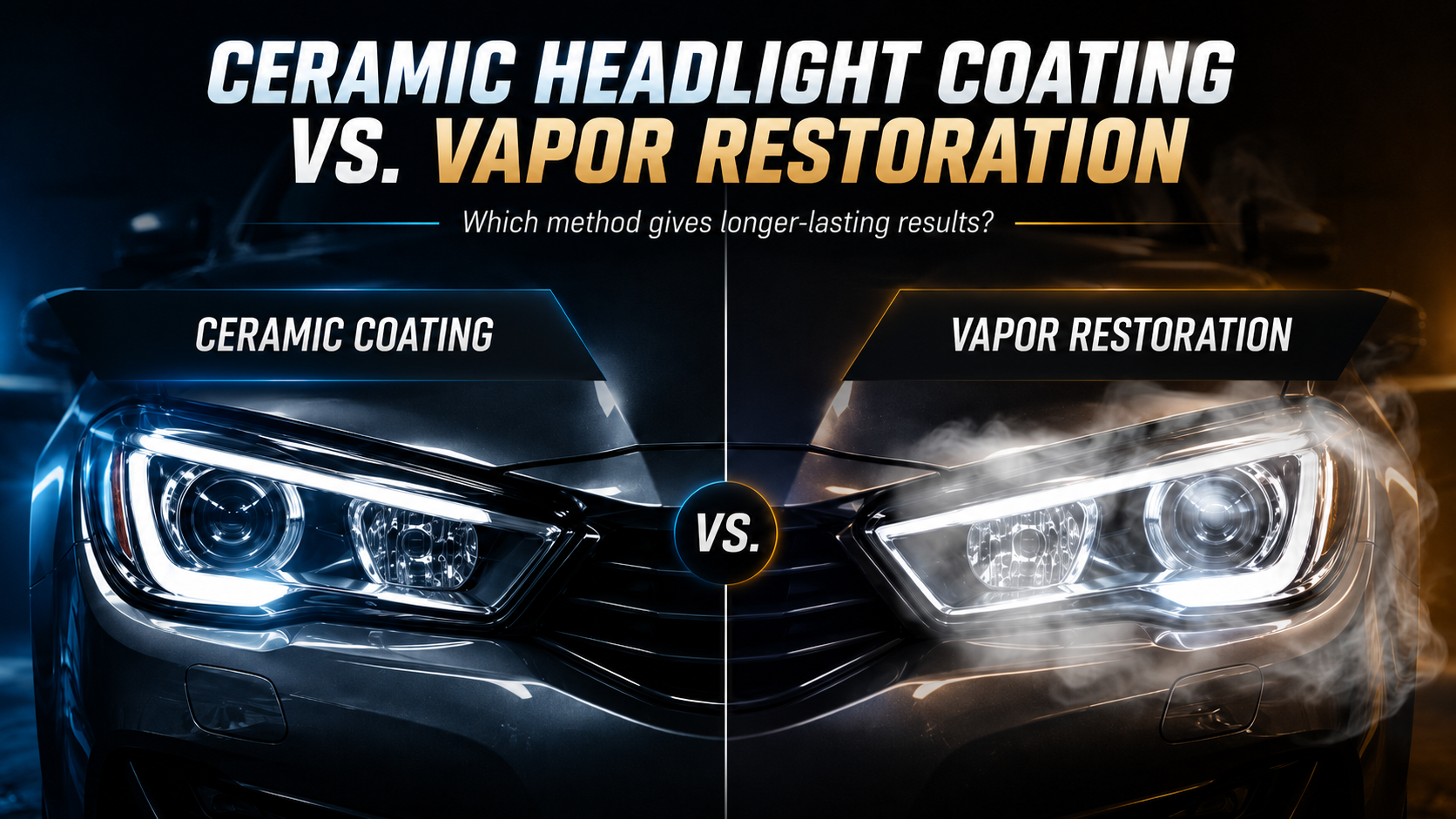
Ceramic Headlight Coating vs. Vapor Headlight Restoration: Which Method Lasts Longer?
A side-by-side comparison of ceramic headlight coating and vapor headlight restoration to help you understand which method delivers clearer, longer-lasting results.
How Long Does Headlight Restoration Last?
What actually determines how long restored headlights stay clear — and how the protective coating, sun exposure, and care habits change the answer.