
Education
Ceramic Headlight Coating vs. Vapor Headlight Restoration: Which Method Lasts Longer?
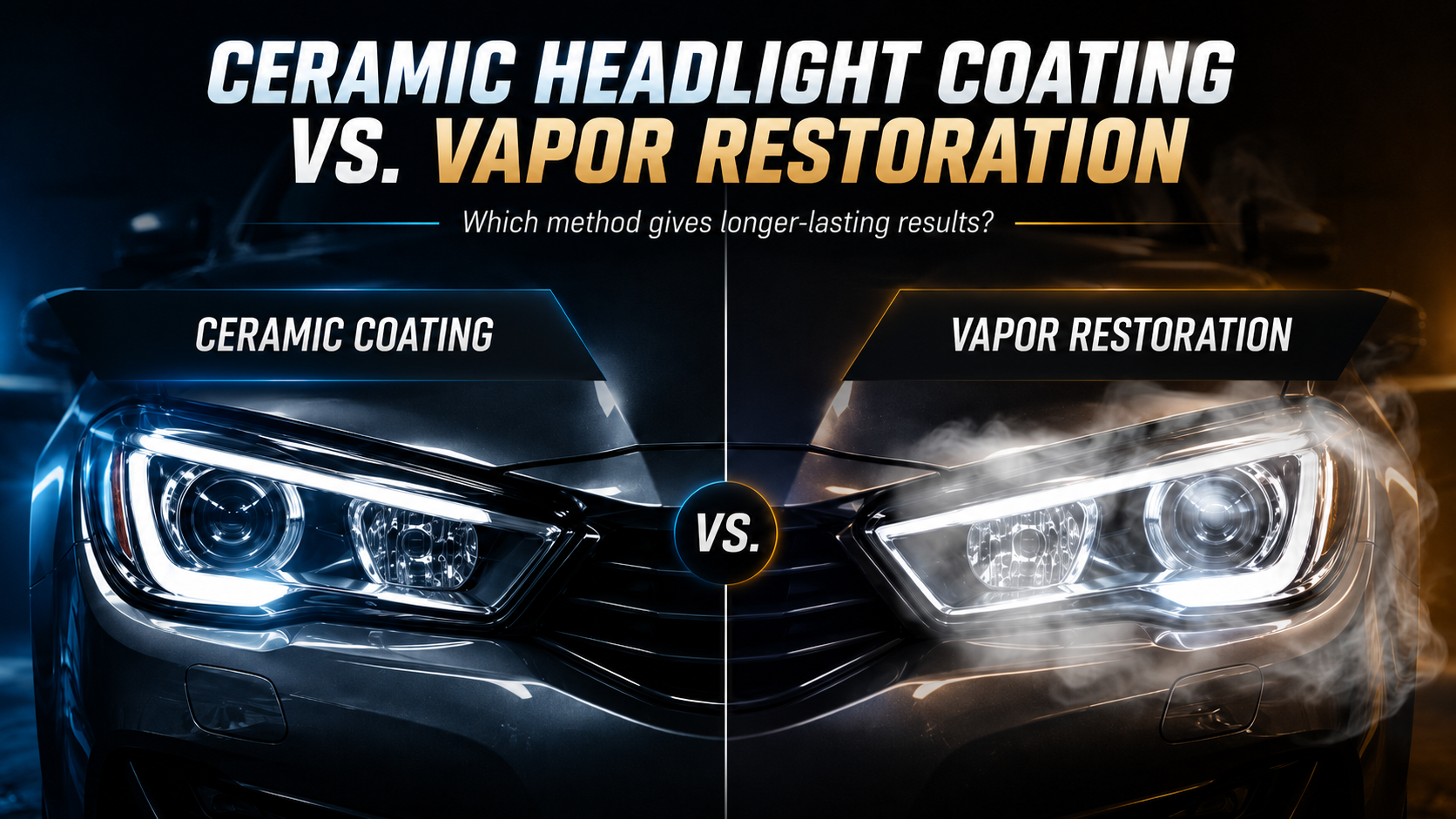
When searching for the best way to restore cloudy headlights, vehicle owners often compare ceramic headlight coating vs. vapor headlight restoration. Both methods can remove the dull, yellow appearance caused by oxidation. However, they use different processes, offer different levels of UV protection, and may produce very different long-term results.
For drivers looking for durable headlight restoration, the biggest question is not just which method looks best immediately. It is which method helps the headlights stay clear longer.
Modern headlights are generally made from polycarbonate plastic. A protective factory coating helps shield the plastic from ultraviolet sunlight, road debris, chemicals, moisture, and weather. As the vehicle ages, that protective layer gradually deteriorates. Once the plastic becomes exposed, oxidation can make the headlights yellow, cloudy, foggy, rough, scratched, and less effective at projecting light. A professional headlight restoration service removes the damaged outer layer and protects the newly restored surface.
Ceramic headlight restoration combines surface correction with long-term protection. The restoration process commonly includes cleaning the headlight lens, masking the surrounding painted surfaces, wet sanding away oxidation and damaged material, refining the surface through progressively finer sanding stages, and applying a UV-resistant ceramic headlight coating.
A ceramic coating creates a protective barrier over the restored lens. This barrier helps reduce damage caused by sunlight, oxidation, moisture, dirt, and environmental exposure. A ceramic coating should not simply be applied over an untreated cloudy lens. The oxidation must be properly removed first. Sanding restores the headlight. Ceramic coating protects it.
Vapor headlight restoration is also known as headlight steaming or chemical vapor restoration. The lens is first sanded to remove oxidation. A heated chemical vapor is then applied to the surface. The chemical softens and smooths a microscopic portion of the polycarbonate, making the lens appear clear and glossy. The transformation can happen almost instantly, which makes vapor restoration popular in before-and-after videos.
However, a glossy appearance does not automatically mean the headlight has received long-lasting UV protection. If the vapor treatment does not leave behind a proven protective layer, the headlight may remain vulnerable to sunlight and renewed oxidation.
Ceramic headlight restoration offers several advantages. It adds UV protection after restoration, helps prevent yellowing and oxidation, produces consistent controlled results, makes the lens easier to clean, helps headlights remain clear longer, costs less than replacing many headlight assemblies, and improves the vehicle's appearance.
Ceramic restoration must be completed correctly. The lens requires thorough preparation, sanding must be completed evenly, and the coating must be applied under suitable conditions. Poor preparation can cause streaking or premature coating failure. The method is not difficult because ceramic coatings are ineffective. It is difficult because proper restoration requires patience and skill.
Vapor restoration can provide fast visible improvement, a highly glossy surface, dramatic before-and-after results, and a reduced need for traditional machine polishing. Potential disadvantages include that UV protection may not be included, durability can be unpredictable, results depend heavily on technician experience, excessive chemical exposure can damage the lens, the surface may oxidize again without a protective finish, and heated chemical vapor requires proper ventilation and handling.
Ceramic coating is a protective finish, not a substitute for proper restoration. If the lens is heavily oxidized, the damaged material must be removed through sanding. Applying a coating over yellow or cloudy plastic may temporarily improve the shine, but it will not correct the underlying damage. Professional headlight restoration should include both correction and protection.
Vapor restoration can be performed successfully by experienced technicians using an appropriate commercial system. However, the process involves strong chemicals that react with the plastic surface. The quality of the result depends on the chemical being used, the compatibility of the product, vapor temperature, application distance, exposure time, surface preparation, technician experience, and whether UV protection is applied afterward. Vehicle owners should ask the provider what protective coating is included and whether the service comes with a warranty.
A properly prepared headlight finished with a dedicated UV-resistant ceramic coating is generally the stronger long-term solution. Ceramic restoration directly addresses the two major requirements of headlight restoration: removing the damaged, oxidized surface and protecting the restored plastic from future deterioration. Vapor restoration may provide impressive immediate clarity, but its long-term performance depends on whether the lens receives adequate UV protection.
Ceramic headlight coating and vapor headlight restoration can both make cloudy headlights look better. However, they are not equal when it comes to protection and long-term value. Vapor restoration focuses on quickly smoothing the plastic surface. Ceramic restoration combines careful surface correction with a protective coating designed to help the lens stay clear. VP Headlights uses the ceramic coating method for long-lasting results. Our headlight restoration process removes the damaged oxidation, restores clarity, and applies a protective ceramic coating to help defend the lens against UV rays, weather, road contamination, and future discoloration.
| Category | Ceramic Headlight Coating | Vapor Headlight Restoration |
|---|---|---|
| Immediate clarity | Clear and polished appearance | Very glossy and dramatic appearance |
| UV protection | Provides protection when a dedicated UV-resistant coating is used | May require a separate UV-protective coating |
| Long-term durability | Designed for longer-lasting protection | Can vary depending on product and application |
| Consistency | Controlled sanding and coating process | Highly dependent on vapor temperature and technique |
| Chemical exposure | Lower reliance on aggressive chemical smoothing | Uses chemical vapor to soften the lens surface |
| Best use | Long-term headlight restoration and protection | Fast surface smoothing and visual improvement |
Ready when you are
Get a free mobile quote.
Send a few photos of your headlights and we'll get back to you with pricing and availability.
Book for $79Keep reading
Why do headlights turn yellow and cloudy?
The real reasons plastic headlights fade — and why polishing alone isn't a lasting fix.
Why Do Headlights Become Foggy?
Learn why headlights become foggy, yellow, or cloudy — and why professional headlight restoration is usually the better choice.
How Long Does Headlight Restoration Last?
What actually determines how long restored headlights stay clear — and how the protective coating, sun exposure, and care habits change the answer.