
Education
How Long Does Headlight Restoration Last?
It is one of the first questions vehicle owners ask before booking a service: how long does headlight restoration last? The honest answer is that it depends. Restoration is not a single fixed product with a single fixed lifespan. It is a process, and the results hold up differently depending on how the work was done and how the vehicle is used afterward.
There is one factor that matters more than any other: whether the lens received a durable protective coating after the oxidation was removed.
Headlights are made from polycarbonate plastic. From the factory, that plastic is covered with a clear UV-resistant coating. The plastic itself is not what fails first — the coating is. Once it breaks down, ultraviolet light reaches the raw polycarbonate and oxidation begins. That is what turns a lens yellow, cloudy, or hazy.
A restoration removes the failed coating and the damaged outer layer of plastic beneath it. That step alone makes the lens look clear again. But a freshly sanded and polished lens is bare, unprotected plastic. Without a new protective layer, it is more exposed than it was before, and oxidation can return relatively quickly.
This is why polishing-only restorations — including most do-it-yourself kits and quick detail-shop passes — tend to fade. The clarity is real, but it is temporary because nothing was put back on top.
A restoration finished with a quality UV-resistant ceramic coating behaves very differently. The coating replaces the protection the factory layer used to provide, shielding the polycarbonate from sunlight, moisture, road chemicals, and contamination. Instead of measuring the result in weeks or months, a properly coated lens is measured in years of usable clarity.
We avoid quoting a single guaranteed number, because conditions vary too much from vehicle to vehicle to make that claim honestly. What we can say is that the coating step is the difference between a short-term cosmetic improvement and a lasting repair.
Several things influence how long the results hold. Sun exposure is the biggest one — a vehicle parked outside in direct Utah sun all day ages faster than one kept in a garage or under covered parking. Climate and elevation matter too, since stronger UV and wide temperature swings put more stress on the surface.
Driving conditions play a role as well. Highway miles mean constant contact with sand, grit, insects, and road salt in winter, all of which abrade the surface over time. A commuter vehicle running I-15 daily sees more wear than a weekend car.
Washing habits also matter. Harsh automatic-wash chemicals and abrasive brushes are hard on any protective coating. Hand washing with a mild soap is much gentler on the finish.
Finally, the condition of the lens before the work began affects the outcome. Deep pitting, cracking, or damage that has reached well into the plastic limits how much correction is possible. Restoration is at its best on headlights where the damage is confined to the outer surface.
You can stretch the results with a few simple habits. Park in shade or a garage when it is practical. Rinse road grime off the headlights rather than letting it sit and bake in the sun. Skip abrasive brushes and strong solvents on the headlights. And avoid applying random polishes or compounds to a coated lens — those can wear through the protection you paid for.
If the headlights eventually start to lose some sharpness after years of service, that is normal wear, not a failure. A lens that has been coated once is usually far easier to refresh than one restored from heavy original oxidation.
The short version: a polished-only headlight looks good briefly. A properly sanded, refined, and ceramic-coated headlight is built to stay clear. VP Headlights finishes every restoration with a protective ceramic coating for exactly that reason — the goal is clarity that holds, not a result that looks good for a photo and fades by the next season.
If your headlights have gone yellow or cloudy, send a few photos and we will tell you honestly whether restoration is the right call for your vehicle. We come to you at your home or workplace across Salt Lake County and Utah County.
Ready when you are
Get a free mobile quote.
Send a few photos of your headlights and we'll get back to you with pricing and availability.
Book for $79Keep reading
Why do headlights turn yellow and cloudy?
The real reasons plastic headlights fade — and why polishing alone isn't a lasting fix.
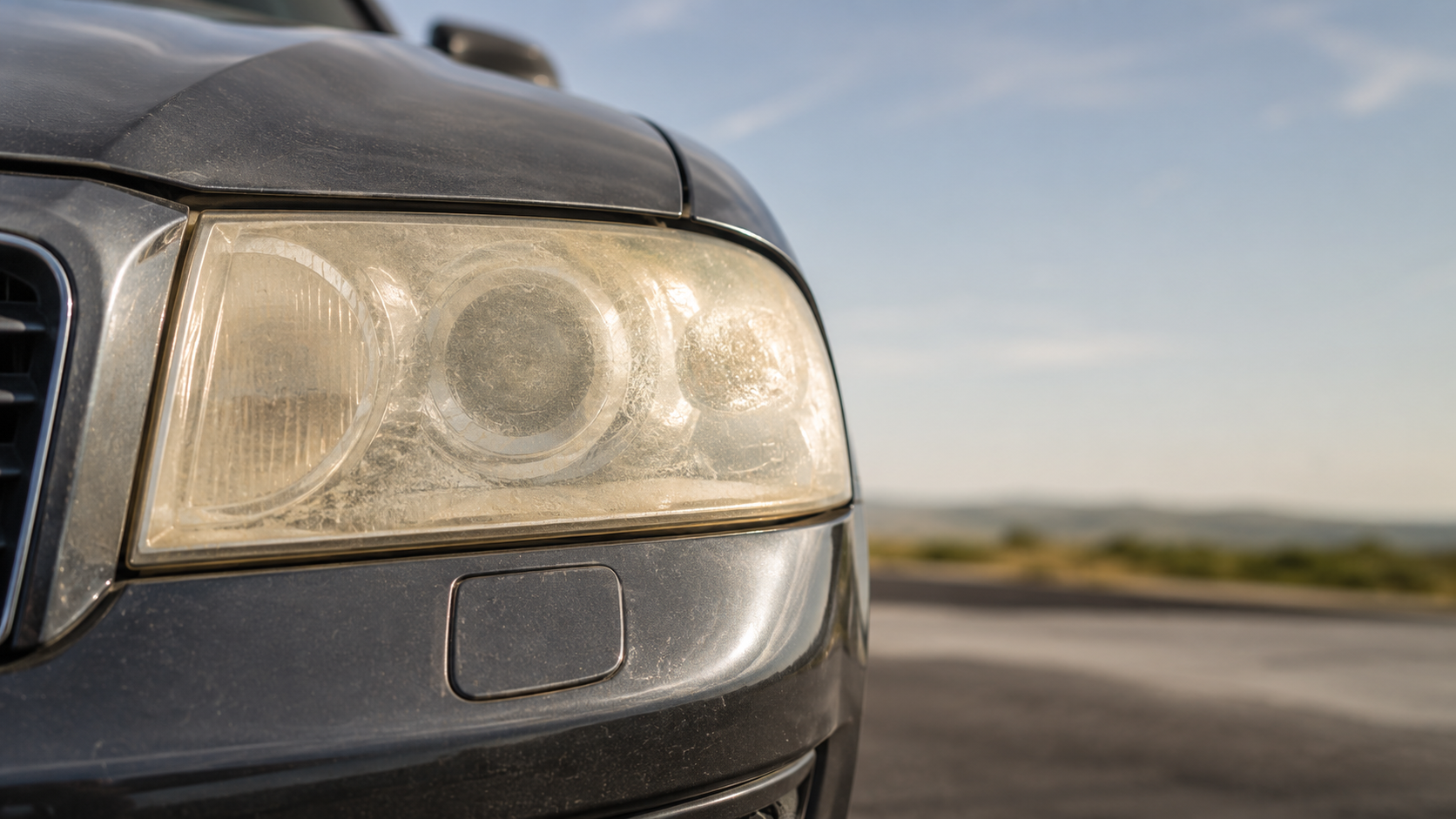
Why Do Headlights Become Foggy?
Learn why headlights become foggy, yellow, or cloudy — and why professional headlight restoration is usually the better choice.
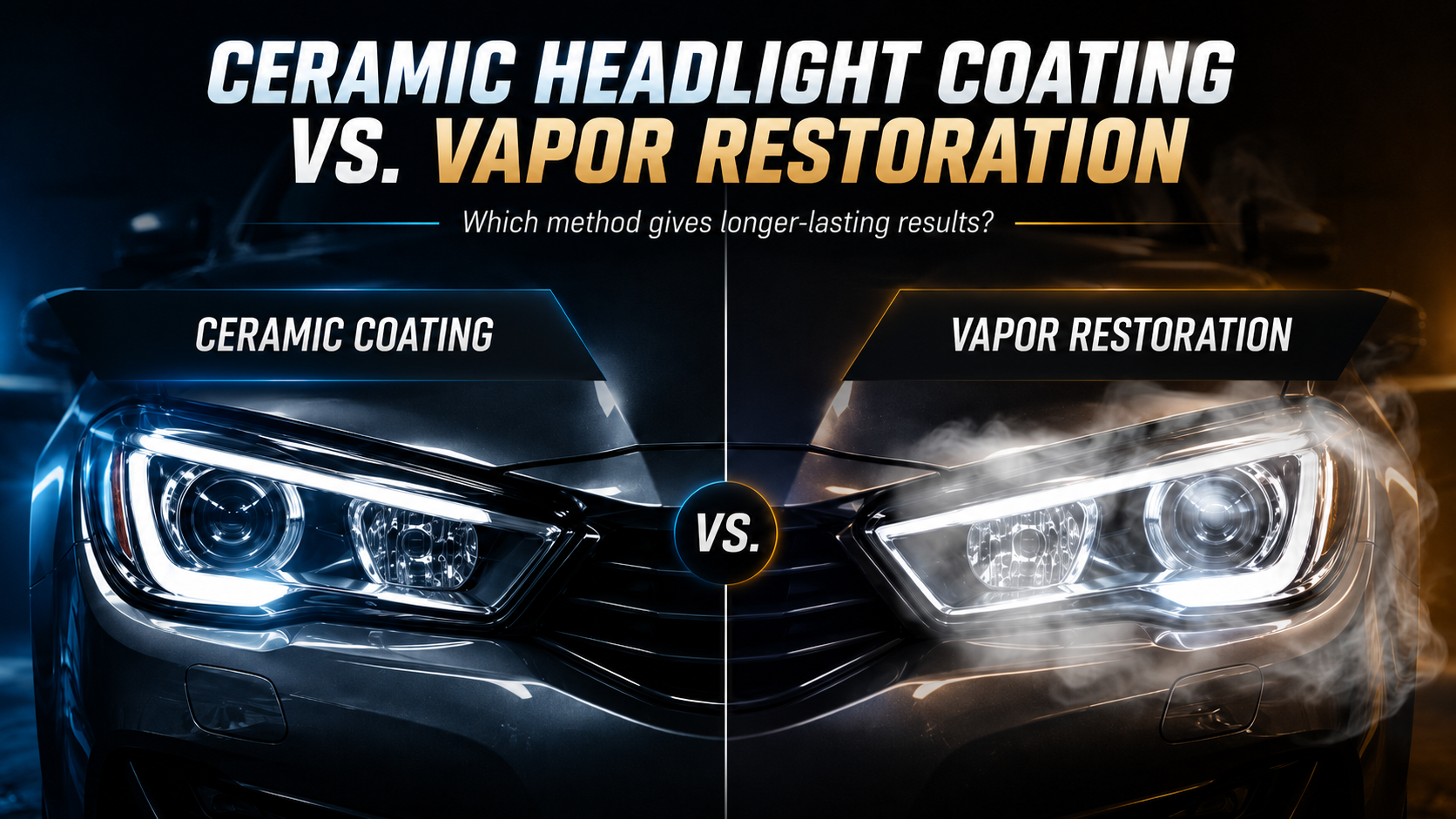
Ceramic Headlight Coating vs. Vapor Headlight Restoration: Which Method Lasts Longer?
A side-by-side comparison of ceramic headlight coating and vapor headlight restoration to help you understand which method delivers clearer, longer-lasting results.